The government is upbeat that its long term development agenda enshrined in its vision 2020 would be achieved before its deadline in the next four years banking on the 72 percent that has already been achieved.
The Minister in charge of Cabinet affairs, Stella Ford Mugabo notes the government is hopeful that the remaining target (28 percent) will be achieved as the country strives its vision of leapfrogging the economy to middle income.
“We found out that this was the time to discuss what we have achieved but also look at how to Fast-track the targets those are still trialing,” she said while briefing the Media on the resolutions during the national leaders retreat over the weekend.
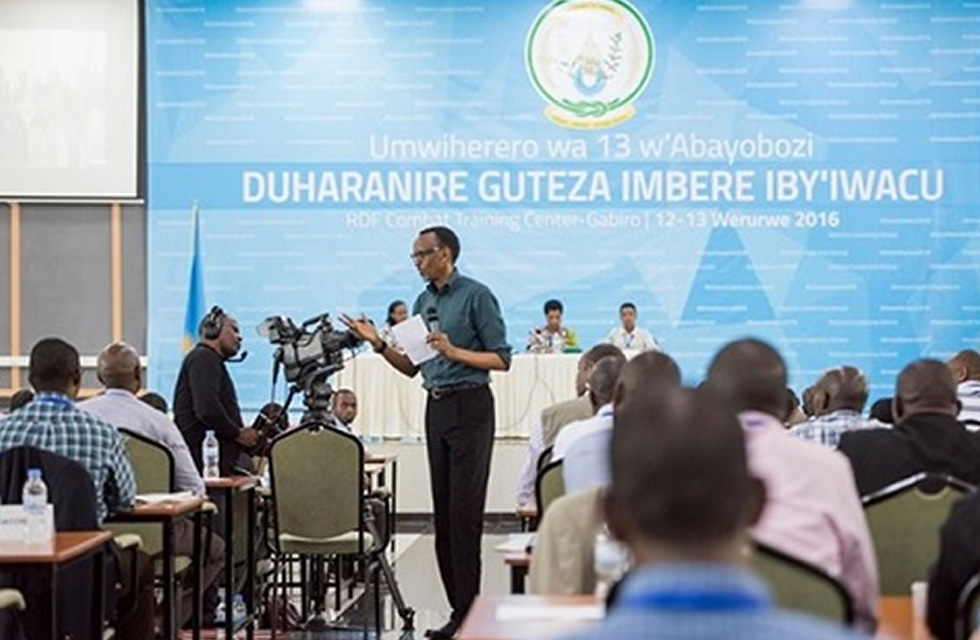
The retreat was held at Rwanda Defence Force-RDF combat training center in Gabiro and chaired by President Paul Kagame under the theme, ‘Striving to promote products made in Rwanda’.
According to Minister Mugabo the retreat discussed four key issues that included Strategies to fast-track the programs under the vision 2020, Second Economic Development and poverty Reduction Strategy-EDPRS 2,the government’s seven year programme ending next year.
Others included revamping the manufacturing sector in order to increase made in Rwanda products, Public accountability and ethics as well as guaranteeing rights of children and promoting social welfare.
Under the EDPRS 2 which his expected to close by 2018 scored 76 percent of the targets while the government’s seven year ending with the president’s term in 2017 has also scored 75 percent with 20 percent in their final progress.
Uzziel Ndagijimana, state Minister of Finance noted that the government is in plans to preparing the 2016/2017 fiscal year budget , noting that the targets that have not been addressed will be catered for in the budget.
“We are agreed during the retreat to put extra efforts using the current systems to ensure that we achieve these targets,” the Minister noted.
He also noted that the targets still lagging behind include, electricity both generation and accessibility, creation of secondary cities, increasing agriculture productivity, export promotion key aspects in the country’s economic growth.